

Sense and Sensibility
By Rehna
Director: Georgia Oakley
Cast: Daisy Edgar jones, Esme Creed Miles, George MacKay, Fiona Shaw
Release date: 25th September 2026
The 1995 film adaptation of Jane Austen’s 1811 novel, Sense and Sensibility directed by Ang Lee, is widely regarded as a definitive (if not the definitive) version. The screenplay was by Emma Thompson. She won an Oscar for it. She also starred as the elder Dashwood sister, Elinor, alongside the luminous new talent that was a young Kate Winslet, who played Marianne. Their respective suitors were Hugh Grant who had just exploded as a heart throb after Four Weddings and a Funeral and the beloved Alan Rickman as Colonel Brandon who had to fight the dashing but caddish Willoughby played by Greg Wise, for Marianne’s affections.
The film was a big success at the box office, was critically acclaimed and is still much loved by audiences worldwide. So, the announcement of a new adaptation was greeted with some apprehension.
The early signs were not promising. The poster featured Daisy Edgar -Jones and Esme Creed-Miles as the new Dashwood sisters, running wild in the countryside, their long hair flowing behind them.
Where were the bonnets? Why were Austen heroines running wild like Cathy from Wuthering Heights?
Then there was the tagline, “No one knows your heart like a sister.”
Austin purists were not impressed. The whole point of the book, they sniffed, is that Marianne does notknow her sister’s heart because Elinor conceals her emotions.
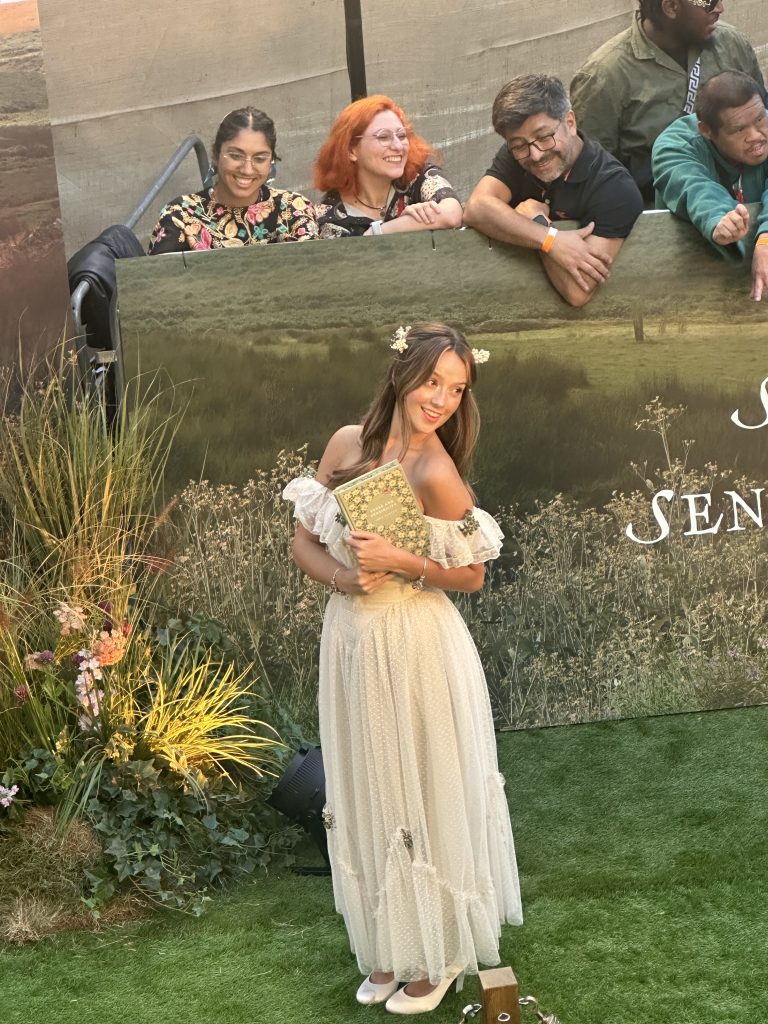
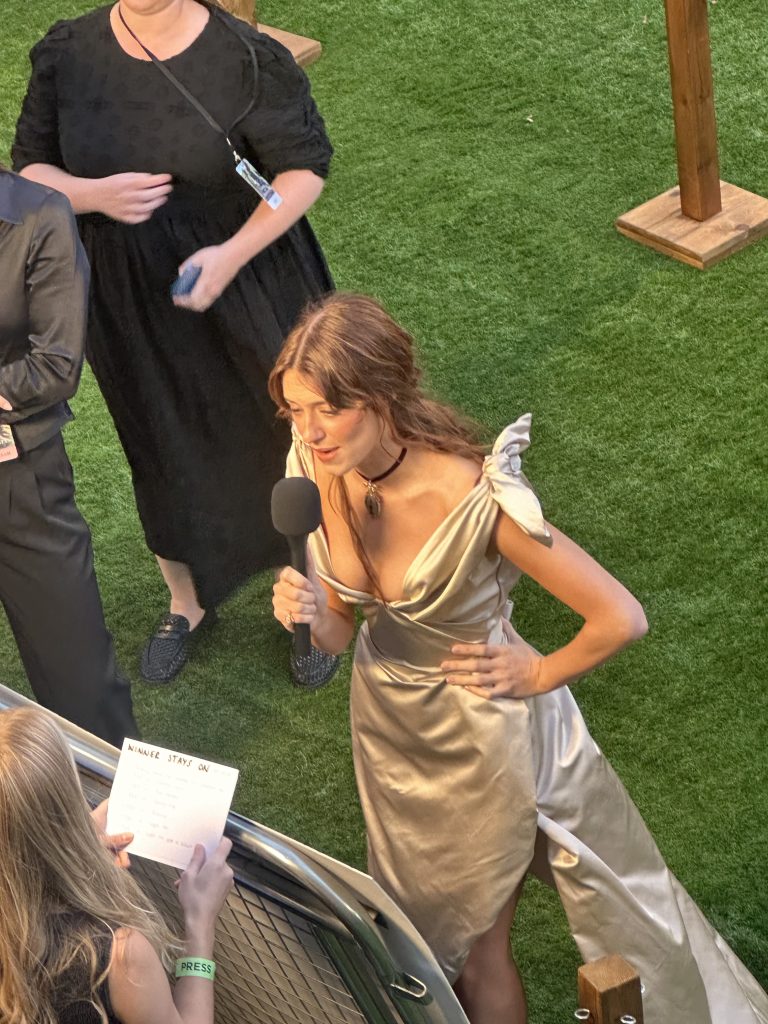
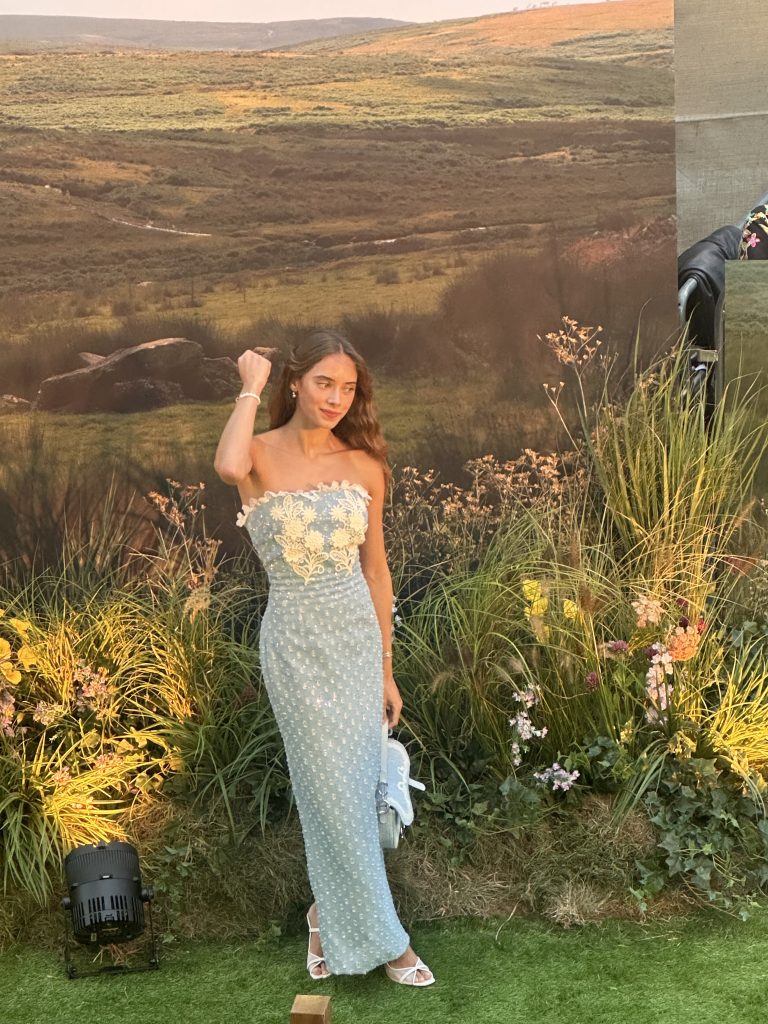
However, the promotion of the film, when it began, indicated that Working Title and Focus Features were confident of their product. The premiere in London was an exquisitely pretty and elegant affair with a lush, countryside-themed green grass carpet and many guests in period costume. The cast was sent far and wide to do talks and give interviews. It’s been 30 years since the last film, they argued. There is always room for new interpretations of a classic work.
They’re right.
This adaptation holds its own against other versions. It’s not a remake of the 1995 film. It’s a youthful, fresh take on a great literary work which keeps the language and social mores of the book but makes the story accessible to a modern audience.
As such, it’s an utterly charming delight.
The story centres around the young Dashwood sisters, Elinor, Marianne and Margaret (Bodhi Rae Breathnach, last seen in 2025’s Hamnet).
Elinor represents sense, calm judgment and reason, although it is to be noted that she does feel strong emotions, but has just learnt to govern them. Marianne is the sensibility; romantic, full of passion and open about her needs and wants. After the death of their father, their circumstances are much reduced and they are forced to downsize to a cottage in the wilds of Devonshire and live very much on charity. Not having the option of a career or the right to own property, they are in need of husbands who can provide for them. They are surrounded by a menagerie of characters who want to either help or hinder them in this ambition.
The book was Jane Austin‘s first novel to be published. Under the guise of a simple plot of women seeking marriage, it is, as many Austins books are, a clever and incisive exploration of human nature and the mores of society. Like the characters of the two sisters, it’s a story of concealment and openness in the wider world they live in. There are many layers under the genteel conversations and formal conduct, many secrets, lies and devious machinations to secure material advantage. As such, there are depths to be mined in the back stories of each character, including the supporting ones. and it is not surprising that the story is a dream for actors and filmmakers, alike to work with.
Director Georgia Oakley and screenwriter Diana Reid (it’s the first screenplay by the novelist), on the whole, mine these depths effectively. They have created a warm, intimate, engaging, humorous, heartbreaking and very believable world. There’s also a woman’s touch to this film which is, at once, both intangible and hard to pinpoint, and omnipresent. It’s in the framing of every shot. It’s in the lived in feel of the clothes the characters wear, especially the three sisters, it’s in the closeups of the sisters as they share the joys of falling in love and the anguish of heartbreak. It’s most present in the way Elinor rescues Marianne from humiliation at a ball. Every woman who has had to save a sister or friend from themselves will recognise that scene.
Daisy Edgar Jones knew her assignment. She delivers an intelligent, thoughtful Elinor who endeavours to do the right thing but is not so distanced from her feelings that the conflict between her desires and propriety doesn’t flicker sadly across her face and in her eyes for anyone who cares, to see it.
George Mackay, is one of the best actors working today and makes for an appealing Edward Ferrars who, despite his shy, controlled disposition is grappling with a similar inner conflict.
Colonel Brandon is aged 30 in this film rather than 39 as he is in the book, to make the relationship between him and the teenage Marianne more palatable. He is played by Norwegian actor Herbert Nordrum, complete with lush facial hair. Both he and Frank Dillane as Willoughby don’t have as much screen time as Mackay to fully develop their characters. Therefore the romantic triangle with Marianne doesn’t have the impact it should and their stories are too rushed to invest in. Dillane is also too obviously a cad from the start and there’s no real sense of yearning in Nordrum‘s Colonel Brandon.
Fiona Shaw, is a scene stealing Mrs Jennings, the garrulous, well intentioned, big hearted but clumsy and unfiltered relative who helps the sisters. Shaw attacks her role with gusto and her eye catching costumes are a sight to behold.
The film is visually very appealing with nature and animals playing a big part in setting character for the humans.
Despite some quibbles, this is a crowd pleasing, welcome addition to the Jane Austin cinematic universe.
4/5
My Sense and Sensibility era
I’ve had quite a Sense and Sensibility fortnight and very lovely it’s been too.
On 15th September, the world premiere took place at London’s Leicester Square. It was probably the prettiest and most elegant premiere I’ve been to. The usual red carpet gave way to a lush, countryside-themed green grass one and the guests who stepped on it brought their sartorial A game. A number of them turned up in period costume and those who didn’t wore their modern finest.
The whole main cast attended looking splendid and it was all very romantic. It was a lovely way to pull people into the world of the film before they’d even seen it.
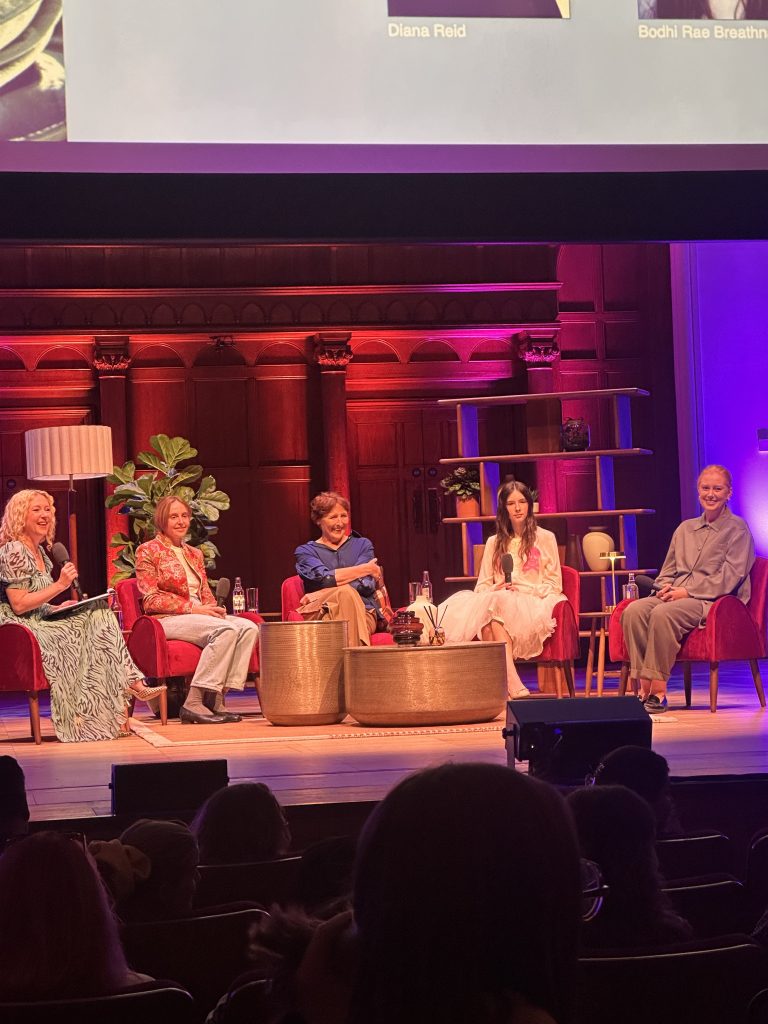
Later that week, as part of the Chelsea Arts Festival, I attended a panel talk about the film at Cadagon Hall featuring Fiona Shaw, Bodhi Rae Breathnach, screenwriter Diana Reid and costume designer Grace Snell. It was an interesting choice of venue because Jane Austen had written much of the book at Cadagon hotel not far from the Hall.
Diana Reid said that she had never written a screenplay before, as she is, primarily a novelist, and she had loved the 1995 film directed by Ang Lee. She was approached to write a screenplay of one of the Austen books and settled on Sense and Sensibility because there had not been a film version for 30 years. She decided she only wanted to do it if she felt she could bring something new and fresh to the story.
She was respectful of the source material but not reverent. She had to be conscious that some parts of the books simply would not work in 2026. For example, Colonel Brandon being in his late 30s in the book and falling in love with the 16-year-old Marianne would not be very palatable today, so in the screenplay she makes him a 30-year-old man and therefore less of a father figure.
As a writer, she said, you fret over every word but then when it’s presented to the actors, sometimes they can say it all with just a look. ‘And when you have the calibre of the actors in this film,that happened often!’
Fiona Shaw described the book as a piece of the architecture of culture. Jane Austen, she said, had an astute, cruel eye for human nature. For example, she created male characters who couldn’t express their affection but there were complicated layers to them which she unravelled, over time, in her books. Her own character, Mrs Jennings, Shaw described as an ebullient woman without filter. She admitted she knew people like Mrs Jennings, in her own life, people who were entirely loud but generally good hearted.
She loved wearing her character’s striking costumes, noting that the layers of the clothing people wore then matched the layers of society of that time
Grace Snell, costume designer, said that she didn’t stick exactly with the period the book was set in. She went back some years earlier and also gave herself some artistic license to produce outfits that helped tell the story. She wanted the clothes to look lived in and which reflected the intimacy of the relationships within the family. So, the sisters share clothing as they would have done, especially after their circumstances were much reduced. It was also a way to show the story arc of the sisters and how they learnt from each other. So it wasn’t just the passing down of dresses but the sharing of their lives.
She used natural dyes for the colours of the dresses as would have been the method during Austen’s time.
Brodhi, who was last seen in another period drama, Hamnet, explained how she, Daisy Edgar Jones and Esme Miles Creed had built up their relationships so that they could convincingly play sisters. She said they spent time together playing games such as ‘never have I ever’ and painting. Her character, Margaret, the youngest sister, she described as a mix of the two older sisters. On set, she had particularly liked all the animals which feature in the film.
On 23rd September I attended a screening at Picturehouse Central followed by Q&A with Daisy Edgar Jones, Esme Miles Creed and Diana Reid.
Before joining the film, Esme described herself as more of fan of Gothic novels. She was into the Brontës. But in preparation for the film she read Austen and developed, what she described as a personal relationship with the world the author had created with her work.
Daisy said she was an Austen fan and when she heard this film was going to be made, she very much wanted to be part of it. She said there was always room for new adaptations because with such a great literary work there was always more to mine and find. ‘New individuals can breathe new life into the characters and introduce new generations to them. Our film complements the 1995 version.’
Talking about creating the sisterly bond with Esme, she said they had known each other a long time and had a shared history. They had worked together as teenagers and it had been interesting and great to reconnect as women in their twenties. She said, she herself has no siblings and so creating a sibling relationship was very meaningful.
Diana Reid said she had wanted to preserve the language of the book and the time and to keep it traditional but also to make it accessible enough to show the universal humanity under the words which can be from any period. She considers the sisters to have very rich inner lives. They are intelligent women. In modern parlance Elinore would be described as a ‘people pleaser’ whereas Marianne is more authentic and herself. But her journey in the story is that she learns that feelings can be expressed differently but still be valid while Elinore learns to go with her feelings. ‘Overall we wanted to create a multi textured film and an intimate, lived in world.’