
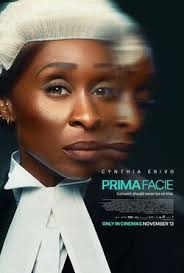
Prima Facie
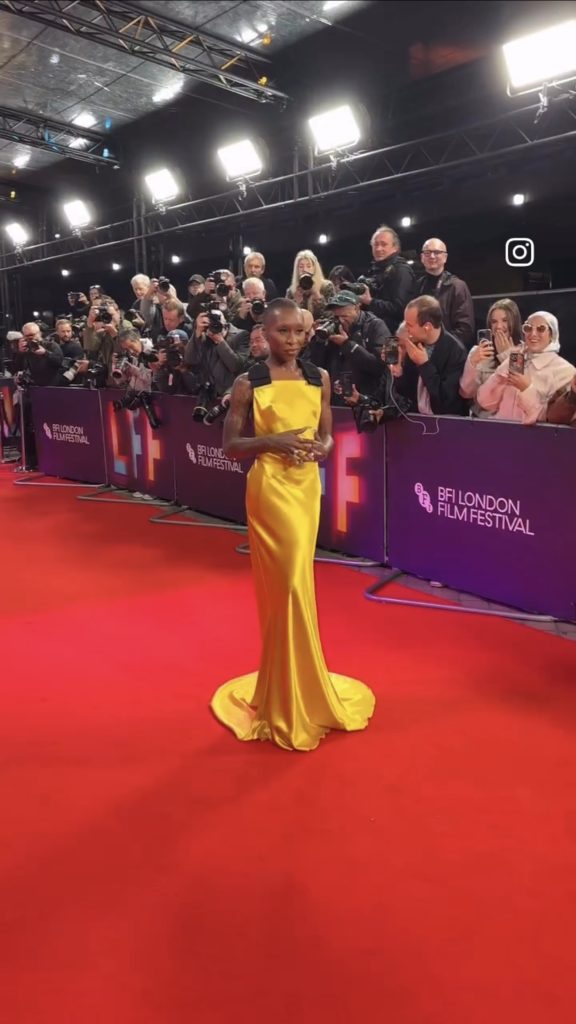
By Rehna at LFF 2026
Director: Susanna White
Writer: Suzie Miller
Cast: Cynthia Erivo, Daniel Ings
Release date: November 13th
Screen adaptations of successful stage plays are notoriously difficult to do well.
‘Issue’ films are notoriously difficult to do well without coming across as preachy.
Films about lawyers are notoriously difficult to do without making lawyers want to throw their horsehair wig at the screen for getting everything legal wrong!
Prima Facie presented all three challenges to director Susanna White, star Cynthia Erivo and the team behind the film version.
Overall, they rise to the challenge.
Tessa Ensler (Cynthia Erivo) is a stiletto heel wearing, sharp suited, Cambridge graduate with a glorious array of earrings and long, elaborate fingernails, who is a rising legal star, nominated for awards. Based at a modern set of Chambers in Lincoln’s Inn, she has earned the respect and admiration of her peers and is developing a practice defending alleged rapists, sometimes getting them acquitted.
When admiring glances from fellow barrister, Julian Brooks (Daniel Ings), turn to the possibility of romance, workaholic Tessa starts buying fancy lingerie and two almond croissants for breakfast.
However, a consensual night of passion soon turns sour, literally, and Tessa’s life takes a dark turn. Herentire world view, professional toughness and faith in the justice system are turned upside down when as a victim of rape, she becomes the primary witness in the subsequent trial.
This is not a spoiler. It is the basic premise of the story: a lawyer who defends alleged rapists finds herself on the other side of the witness box.
The play, also written by Suzie Miller, was a wildly successful, one-woman production, featuring a phenomenal, electrifying performance by Jodie Comer. It centred on a young, working class, white woman practising as a defence barrister specialising in rape cases, whose personal and classvulnerabilities come to the fore when she pursues a sexual assault case against a colleague.
When it was first announced that Erivo, a British actress of Nigerian heritage, would be taking on the role of Tessa Ensler in the film version, there was a query whether the basic dynamics of the story might change to a focus on race as well as the sexual and class aspects. However, Erivo’s racial background does not create any particularly significant changesin the story. Tessa stays an outsider in a profession where posh boys with fathers who are High Court judges still have it easier, but that position is due to several factors, not just her race.
As Miller and White have both said, in interviews, some eighty-six different actresses have played the stage role, so there is no definitive Tessa or ‘victim.’
The courtroom scenes are executed with care and clearly based on meticulous research. Barristers will recognise the makeup of a modern courtroom, the adrenaline rush of a ‘win’ for client and lawyer, the tension of a ‘loss,’ and the studied attempts to see the result as neither.
Legal London, specifically Lincoln’s Inn, the Royal Courts of Justice and the Old Bailey, are shot to handsome effect, as are other landmarks in the city.
If the high heels on centuries old court floors, the swish of long ponytails over exquisitely tailored suits and even a glimpse of a tattoo are a far cry, for some, from the image of a ‘traditional’ criminal law barrister, then they haven’t been paying attention. Yes, there are still the carefully crumpled Rumpole of the Bailey barristers terrorising the accused, and long may they continue, but there is also a new breed of counsel (another term used for barristers) brought up on the notion that you bring ‘your whole self’ to work.
The popularity of the Legal Style Awards, which I founded three years ago, is proof that for the modern barrister, ‘serious’ lawyer does not mean a frumpy wardrobe.
https://www.itsalawyerslife.com/itsalawyerslife-and-the-legal-style-awards/
These are not just glossy details. They show the level of research and thought that has gone into this film. While Suzie Miller, in her play, brilliantly captured the mindset of a barrister, Susanna White shows the way the profession has changed with small but important visual details. Tessa, in her pristine barrister’s wig, worn over one of the collection of personal wigs she uses, is watched over by generations of bewigged, old, white men in the portraits and busts that adorn legal buildings. These men shaped the law over many centuries. Now, Tessa Ensler, a woman of Nigerian heritage, is looking to adapt it for a modern era.
Where the film adaptation is less successful is in its frequent reliance on exposition. For example, Tessa explains the cab rank rule to a colleague: that as a barrister you take on whichever case you are given, unless there is a particularly good reason why you cannot or will not do it. While it is understandable that some aspects of the law need to be explained to a non-legal audience, it does not always make sense in the context of the story. Why would Tessa need to explain the basic principle of the cab rank rule to a barrister colleague who likely would know of it? It would have been more convincing for her to do so with a family member who was not in the profession.
Tessa also provides a voiceover for her story. On stage this worked because it was a one woman show with the character delivering a stream of consciousness monologue. On screen it can sometimes feel like a cop out, a way of telling rather than showing the audience what is happening and why.
And so, to the ‘issues’ the story raises.
To report the matter to the police or not?
When and how is consent withdrawn when you are involved with the person? What does the investigation process involve?
How long does it all take to get to court?
How important is the make-up of the jury as to whether you will be believed?
These are just some of the questions the film tries to tackle. It is a big ask of what is a piece of entertainment, but Prima Facie does a solid job in trying to answer them, where that is possible.

With an illustrious television career in documentariesin her background, Susanna White has an eye for detail and silent social commentary with just an image and creates the world of the story well. Her direction is assured, the film is well paced, and she shows an instinctive feel for what needs to be highlighted.
While, overall, the film has a made for TV feel to it rather than a cinematic one, it is not a fatal flaw. It does, however, raise the question of what a television series of this story could have been. With more time to develop the characters, the impact of the assault and the betrayal behind it could have been more devastating.
The multi talented and charismatic Cynthia Erivo is confident and strong in the lead role and carries the movie well. She has publicly acknowledged the real-life barristers who helped her craft the character into a believable lawyer and she clearly took on that advice to powerful effect.
Prima Facie is eagerly awaited by many keen to see this timely topic explored on screen having either loved the stage play or missed it. The film will, no doubt, provoke discussion and consideration of how rape is dealt with in a legal system which, as the film points out, has been developed over hundreds of years by men.
In that respect it is a significant and dare I say it, important offering. Superhero films are often described as an ‘event.’ Well, this film is a conversation, a debate, a discussion, a conference topic and potentially a call to action.
It’s a film that needs to be seen.
4/5