
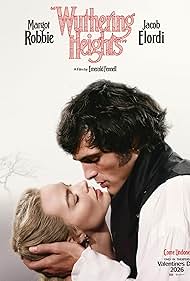
Wuthering Heights: Film review
Emily Brontë‘s masterpiece, Wuthering Heights is sacred text to its generations of fans. It’s a bold, savage, layered, morally complex exploration of the depths of the human psyche, including obsession, vengeance, addiction , possession, death and the unfathomable desires and needs that can lie within the human heart.
Reading it is a visceral experience for many.
The story is peopled with some of the most unlikeable, yet utterly unforgettable, and compelling characters in literature. Its two main protagonists are objectively pretty awful. Catherine (Cathy) is manipulative, selfish, cruel. Heathcliff is a dark, malevolent force and sadistic brute.
Yet the book is beloved. Cathy and Heathcliff have become a byword for passionate romance. Heathcliff regularly ranks high in lists of the most romantic literary hero. To have such a vice like grip on the emotions of its readers and even those who haven’t read the book but know of the characters, is a testament to the genius of Brontë who died at 30 and save for a trip to Brussels, lived her entire life in a small village in Yorkshire. Her imagination, however, soared far and wide.
It’s not surprising, therefore, that filmmakers, the world over, have sought to bring the novel to the screen. From Japanese cinema to Bollywood, writers and directors have tried to capture the passion and power of the story for cinema. .
The Hollywood adaptations began in 1939, with English Shakespearean thespian Laurence Olivier and Hollywood actress Merle Oberon in the lead roles. Despite the Yorkshire Moors being, very obviously, a cheap set on a studio lot and Olivier being too clean cut to be convincing as a wild and rugged Heathcliff, the film is a reasonably faithful adaptation of the book.
Since then, the likes of Ralph Fiennes, Tom Hardy and Timothy Dalton have played Heathcliff, alongside actresses including Juliette Binoche and Charlotte Riley as Cathy. The films have tended to focus on the first part of the book, about Cathy and Heathcliff, not the second which is mostly about their descendants.
Despite different filmmaking styles and interpretations, all the films have fallen short of truly exploring the uncomfortable themes of the book, or the deeply damaged people in it who hurt each other and others around them, preferring to present it, instead, as a passionate love story.
The trailer for Director Emerald Fennell’s 2026 version sold it as ‘the greatest love story ever.’ Fennell herself has said that she first read the book when she was 14, it affected her intensely and she hoped the film would show her reverence for the source material.
It’s evident, in the result, that the 14-year-old Emerald was very much present in the room when the adult Miss Fennell wrote the script. How else to understand or explain the juvenile, fantasy fanfiction the film is? The prospect of Emerald Fennell ever making a film of a book she doesn’t like is, frankly terrifying, if this muddled mess is her showing reverence.
Of course, books and films are two different mediums. A filmmaker has to create a visual telling of the story and in order to do that effectively, parts of the book have to be jettisoned, changes have to be made and plot lines have to be altered.
That’s an adaptation. There’s also artistic vandalism.
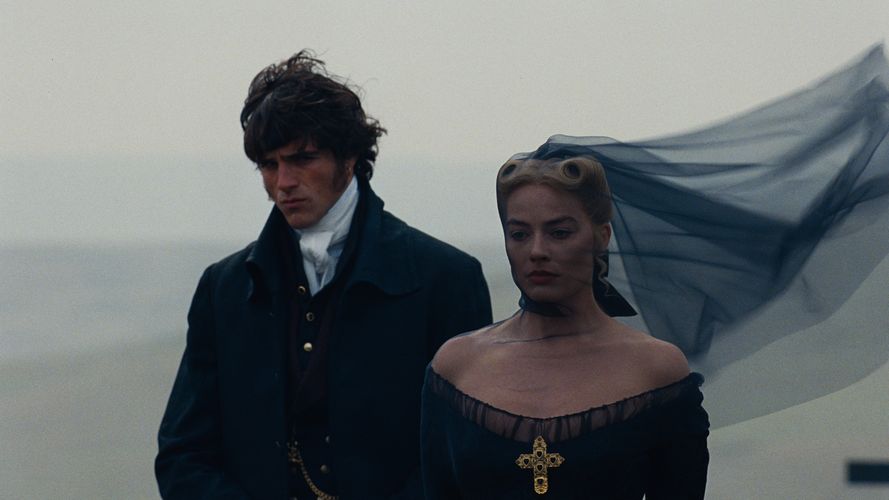
If you’re a literary purist, Fennell’s “Wuthering Heights” (the speech marks are pure cop out) is an abomination. Fennell makes changes which simultaneously add nothing to the original story while detracting from whatever she’s trying to say with her version.
So, for example, in the book, Heathcliff is a foundling rescued by Cathy’s kindly father and brought to live with the family. Cathy’s brother, Hindley, who will become an alcoholic gambler in later life, dislikes Heathcliff instantly. He subjects the boy to merciless bullying, violence and ritual humiliation, never letting him forget his lowly origins. Fennell amalgamates the characters of the father and son into just the father, played by Martin Clunes. He’s very good in the role. But it means that the story makes less sense. Why would a man who saved the child then subject him to brutality? It also destroys the story possibility of the tension within the household which would have been created by the opposing characters of the kind father and the cruel son, making Cathy’s attraction to Heathcliff more interesting.
Similarly, in the book, the man servant, Joseph, is a cantankerous, old, Bible thumping busybody who is both the scourge of Cathy and Heathcliff’s young lives and someone they can torment. He could have been great comic relief in a heavy tale. Instead, he is a strapping, young stable boy given to having rough sex with the maid, for a flimsy reason to introduce Cathy to the idea of sex.
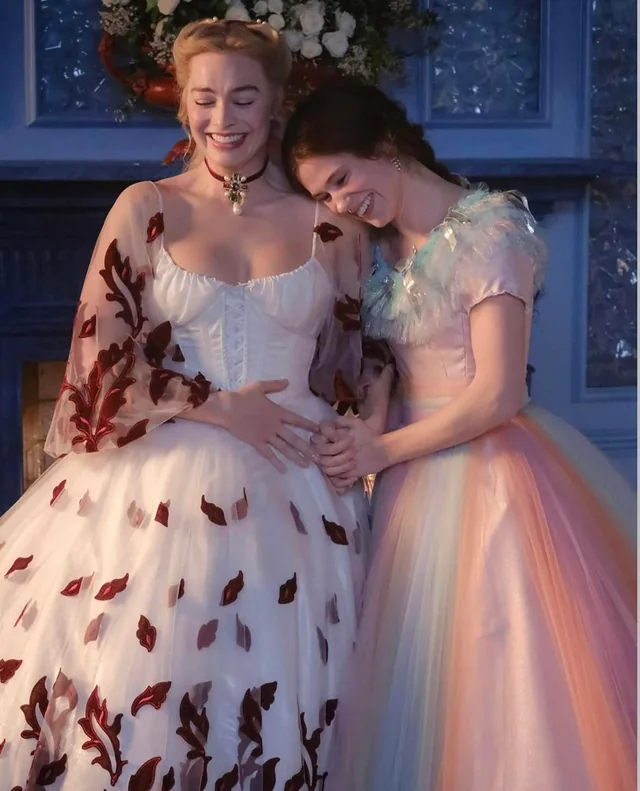
In the book, Isabella (Alison Oliver) is the sister of Edgar Linton, the man Cathy marries. Isabella is the opposite of Cathy, soft, fair blonde and becomes, through her naivety, the victim of horrific domestic abuse when Heathcliff marries her out of spite and to punish Edgar. In the film Isabella is something of a simpering simpleton given to making creepy mini dolls of the people around her. She is the legal ward of Edgar Linton, rather than the cherished sister he would want to protect. After her marriage, Isabella is shown as a willing victim of sadomasochistic sexual games but in a flippant way that turns her into a comedic side act. Alison Oliver does a great job with the material she’s given. But again the whole tension between Heathcliff and the Lintons which adds menace to the story, is lost.
The most jarring aspects of the film though, are in the portrayal of Cathy and Heathcliff.
For a start, Jacob Elordi and Margot Robbie appear to be acting in two totally different films. Robbie behaves and speaks as if she is playing Elizabeth Bennett from Pride and Prejudice in an episode of Downton Abbey. While Elordi is doing his best Yorkshire accent and trying to be a wild, untameable brute. In this attempt, he is hampered greatly by a script that would put a Hallmark movie to shame (albeit a very raunchy Hallmark movie). While Fennell keeps some of Brontë‘s most powerful lines such as Cathy saying “whatever our souls are made of his and mine are the same.” And Heathcliff telling Cathy, “I have not broken your heart You have broken it and in breaking it you have broken mine,” the rest of the dialogue is, at times, either too modern sounding or plain cringeworthy. The sex talk between Cathy and Heathcliff (definitely not in the book) is toe curling.
There were grumbling, on the internet, when Elordi and Robbie were first announced as the lovers. Margot Robbie, whilst enormously popular, beautiful and a fine actress was deemed about 15 years too old to play Cathy, as well as too blonde and just too modern looking. It has to be said, despite a solid performance from her, at no point is she believable as a feral, unkempt teen running wild around the moors.
The objection to Elordi was more predictably about Heathcliff‘s ethnicity, a fruitless social media talking point that has arisen in recent years from references in the book about him being dark. Emily Brontë may have had notions of a man with the appearance of a rugged gypsy or an Italian or Spaniard, who would stand out in the community she was writing about as dark, and therefore have the requisite air of danger about him. The description of a dark person in books of that time can also be read in the same way that novels of the era described a man ‘making love’ to a woman on the dance floor, in full view of polite society. This was not a reference to him breaching the public obscenity laws, it was a description of sweet talk and holding a woman close. Heathcliff is also described as being white as a ghost and as pale as the wall behind him. His otherness is in the darkness of his soul. References to his dark, brooding appearance also distinguish him from the lilly white blondeness of blue eyed Edgar Linton; Cathy being torn between light and dark, good and evil. Despite its controversial, themes, Emily Brontë was not writing a Netflix type interracial romance in the 1840s!
If anything there is more potential for controversy about Shazad Latif, an actor of South Asian origin, playing Edgar who, is explicitly described as fair and light haired.
Jacob Elordi is perfect casting as Heathcliff. He has the physique and acting chops to provide the air of menace required for the role. The problem is that he deserved a better film to fully realise what the character could be. Instead, he is often left to say what a monster he is rather than show it.
The other disappointment is the lack of any real chemistry between Margot Robbie and Elordi. You never get the sense of intense passion between them that has to be the core of any adaptation of Wuthering Heights. Unlike in the book, there is plenty of kissing and moaning but you never get the sense of real longing. Margot Robbie plays Cathy like Estella from Great Expectations. From childhood she behaves in a superior way towards Heathcliff. This then develops into sarcastic banter between them as they get older. The intense connection is, therefore, never established. When they come back together after a lengthy separation, it doesn’t feel like the union of two souls who have been lost without each other.
If you have no emotional investment in the book and are prepared to see the film as Emerald Fennell’s vision, her interpretation, her reimagining of Wuthering Heights and through her stylised lens, it is enjoyable enough. It remains fundamentally hollow and muddled for many of the same reasons as above but there’s a story to follow, atmospheric sets, gorgeous cinematography with every frame filling the screen like a beautiful painting and a haunting, evocative soundtrack. Owen Cooper, as the young Heathcliff is excellent. Alison Oliver brings the laughs. Elordi and Margot look fantastic. The costumes, while incongruous, are gloriously over the top and stunning. And the ending does finally evoke all the emotions and even some tears.
If you don’t fancy sitting through the 2.5 hours of the film, however, and can’t make it through the book, just listen to Kate Bush’s number one hit. She tells you the entire story in three minutes!